












Study reveals how expert approach and gender influence raptor conservation

An international team has analysed, through interviews with raptor conservation experts, how they perceive the positive and negative effects of this group of birds on society, as well as the factors influencing those perceptions. The research confirms that experts' viewpoints depend on their conservation approach and gender, suggesting that interdisciplinary approaches and greater gender equity can improve the understanding and management of the challenges associated with raptor conservation. Recently published in the journal Frontiers in Bird Science, the study which involved the National Museum of Natural Sciences (MNCN-CSIC) provides valuable insights to promote the conservation and coexistence with these species globally.
Understanding the perception of those who coexist with raptors is essential for designing more effective coexistence strategies
Raptors play a key role for society by providing essential services such as controlling species that can damage crops, reducing disease risk, removing carrion, and boosting ecotourism through birdwatching. The study analysed 19 raptors contributions to people (11 benefits and 8 detriments/conflicts) and involved 76 raptor conservation experts from 31 countries worldwide. The results indicate that, beyond the localized and geographically restricted conflicts that raptors may generate, the global balance according to the experts is that raptors are considered more beneficial than detrimental to society.
"What we wanted to assess were some of the contributions that nature provides to humans, focusing the analysis on raptors at a global scale. The concept of nature's contributions to people (NCP) encompasses the benefits –material, cultural, and ecological– and detriments –damage to human property, fear, or controversies between social groups– that species generate for society. This aspect has been well studied in ungulates and carnivores, but it had never been evaluated for raptors before until now," explains Santiago Zuluaga, researcher at MNCN.
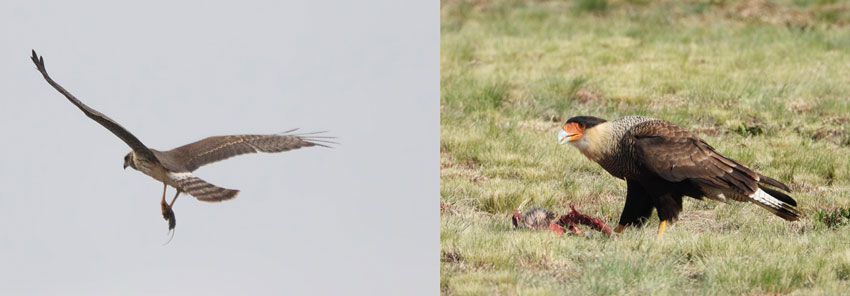
Among the most valued contributions are the capacity of vultures to remove decomposing organic matter, and the role of owls and falcons in controlling rodents and species that affect agriculture, two benefits that help reduce risks to human health and food security. At the same time, most experts recognised the existence of some detriments associated with predation on livestock and domestic animals, competition with hunters for certain game species, disagreements among social groups about how these birds should be managed and conserved, as well as the fear that some species can generate. The most controversial group was hawks and eagles, which are responsible for a significant proportion of both benefits and conflicts. "This finding is important because among hawks, eagles, and vultures are some of the species at greatest risk of extinction. Thus, understanding both the benefits and detriments, as well as the conflicts among stakeholders regarding raptors, is essential for experts to design more effective coexistence strategies between people and raptors," says Hernán Vargas, from The Peregrine Fund, a US-based organisation focused on raptor conservation.
Vultures and owls are perceived as the most beneficial raptors, compared to other species that may generate more conflicts with livestock or game
One of the most relevant findings of the study is that experts who consider an interdisciplinary conservation approach to be more effective – one that combines biological and social sciences– also recognise a greater number of both benefits and detriments/conflicts associated with raptors. Moreover, the vast majority of participants advocated that the conservation of these species should be approached from perspectives that integrate ecological, social, and cultural knowledge. “Raptor conservation can no longer be understood solely from biology or ecology. Social perceptions, cultural traditions, conflicts, and conservation decisions are embedded in a complex socio-ecological system that must also be considered. Therefore, the broader the experts' perspective, the more comprehensive the understanding of the complex relationships between people and these birds. This is of great importance, especially at a time when many of these species face growing threats from landscape transformation, pollution, climate change, and human persecution, among others,” says Zuluaga.
Gender diversity and local context
Although women represent less than one-third of the experts working with these birds and who participated in the interviews, the results suggest that greater gender equity may enrich the understanding of conservation problems and favours more comprehensive approaches. Female experts recognise a greater number of both benefits and conflicts related to raptors. "Diversity in scientific teams is not just a matter of equity. The study suggests that incorporating diversity of approaches and gender in conservation teams can help better identify both the benefits and challenges associated with raptors, thereby improving biodiversity conservation," highlights Zuluaga.
The study also underscores the need for more detailed assessments at regional and local scales, as perception depends on the cultural, economic, and ecological context of each territory. "Sometimes this can also favour conservation. A significant example happens in Mumbai, India, where vultures feed on human bodies as part of a thousand-year-old spiritual practice of Zoroastrians. Now that vultures are disappearing, it is these same people who want them back because of the meaning and spiritual value they hold in their culture. If experts cannot identify these nuances, they cannot incorporate them into raptor conservation management either," concludes Juan Manuel Grande, researcher at CONICET and the National University of La Pampa, Argentina, who also co-authors the study.
Date
Friday, 28 August 2026Publicado en
Frontiers in Bird ScienceInvestigador
Santiago ZuluagaReferencias
Zuluaga, S., Vargas, F.H. y Grande, J.M. (2026). Raptors’ contributions to people and human-raptor conflicts worldwide: an expert assessment. Frontiers in Bird Science DOI: https://doi.org/10.3389/fbirs.2026.1819176
Documentation


You might be interested

