











Program






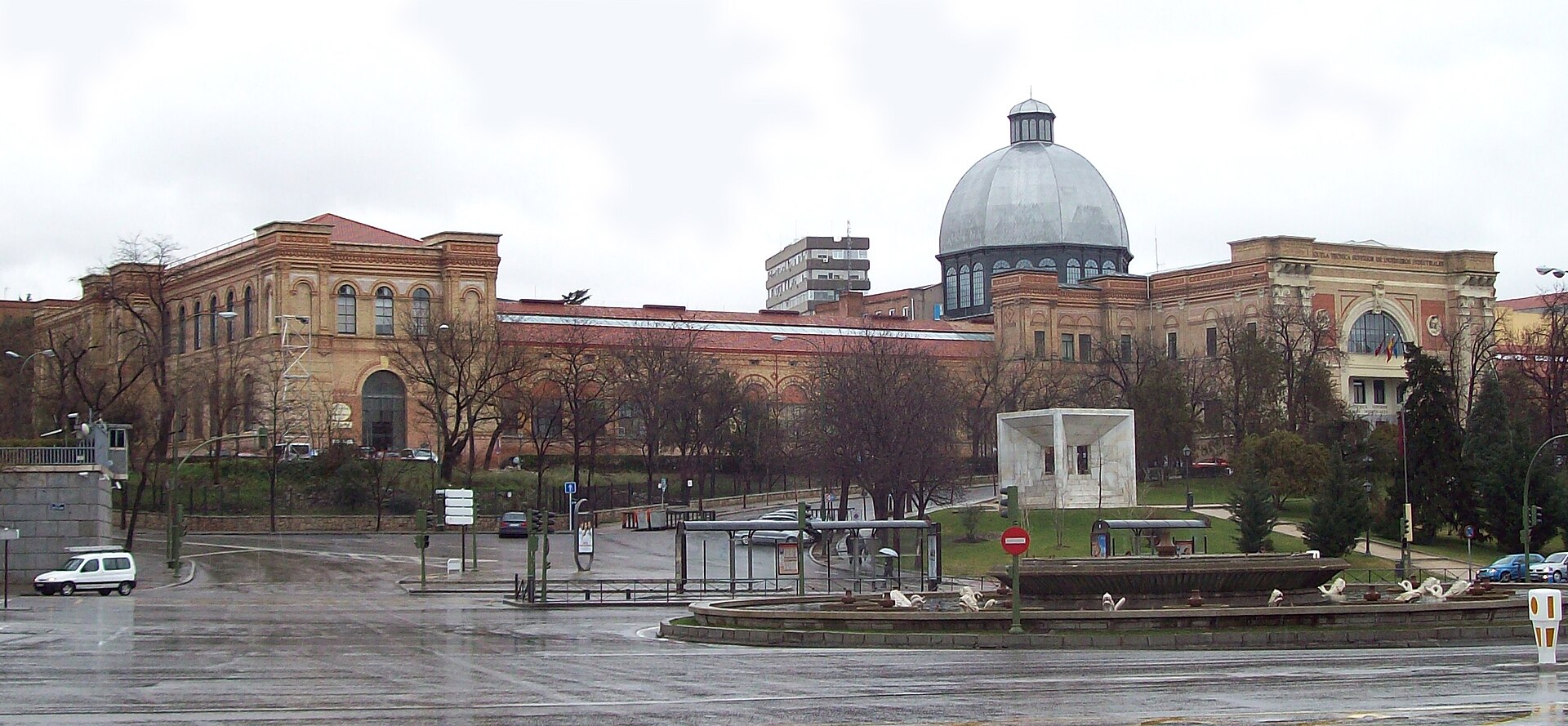
Venue: National Museum of Natural Sciences
José Gutiérrez Abascal, 2 Madrid
JME Meeting
* Download program & book of abstracts below
Schedule
Monday, August 25th
9:00-9:25 Opening (CSIC authorities, David Liberles) 9:25-10:40 Section 1 (3T) New functions I:
- David Liberles, Structural and functional characterization of divergence of genes in a duplicated pathway
- Erich Bornberg-Bauer, “Chance and necessity in protein sequence space”
- Beatriz Sabater-Muñoz, Adaptive experimental evolution and genomic changes of newly duplicated genes in Saccharomyces cerevisiae
10:40-11:10 Coffee break
11:10-12:25 Section 2 (3T) New functions II:
- Gaurav Diwan, A phylogeny aware analysis of gene function for the biodiversity genomics era
- Ivan Ayuso-Fernandez, Redox robustness through hole hopping drives enzyme evolution)
- David Alvarez-Ponce, Solving the G-value paradox: Organismal complexity strongly correlates with the number of protein families
13:00-14:15 Lunch
14:15:15:30 Section 3 (3T) Speciation and populations:
- Silu Wang “On the mitonuclear energetics behind the tree of life”
- Davorka Gulisija, Evolution of phenotypic plasticity owing to migration
- Rosa Fregel, Paleogenomic inference of the effects of insularity in Canary populations
15:30-16:00 Coffee break
16:00-17:30 Free time for interactions
17:30-20:30 Visit to museum and welcome cocktail
9:00-10:40 Section 4 (4T) Biomedical:
- Mario Benitez-Prian, Molecular evolution and in silico biomedical potential of antimicrobial peptides in caecilians
- Kostantinos Voskarides, The role of cancer genes in adaptation and evolution
- Anet Filipova, “Evaluating Aging Markers in Blood: Stable Telomeres and Sex-specific Changes in mtDNA Copy Number”
10:40-11:10 Coffee break
11:10-12:50 Section 5 (3T) Ecology I:
- Jake Barber, Mutators increase survivability and stability of pairwise communities
- Eyal Privman, Evolution of supergenes: lessons from social chromosomes
- Zu-Shi Huang, “Molecular phylogeny and adaptation of the cavefish genus Sinocyclocheilus”
13:00-14:15 Lunch
14:15:15:30 Section 6 (3T) Ecology II:
- Yuan Fu Chan, Phenotypic and genomic signatures of urban adaptation in Raphanus raphanistrum
- Hector Lorente-Martinez, Adaptive Evolution of Aquaporins in Amphibious Fishes: Insights into Structural Determinants of Ecological Transitions
- Rafael Zardoya, Venomics of cone snails
15:30-18:30 Coffee break and poster section
17:00-18:30 Workshop on Bayesian statistics (Rosina Savisaar, Mondego Science). Sala de Juntas
18:30-20:30 Editorial Board meeting (Sala de juntas) and Dinner
9:00-11:05 Section 7 (5T) Methods:
- Sudhir Kumar, Revising Felsenstein’s bootstrap support for phylogenomics
- Cristina Landa, The Regularized Maximum Likelihood and Minimum Evolution (REGMLAME) score improves and unifies ML, ME, Bayesian and Least square methods for phylogenetic inference.
- Praveen Karanth, Exploring patterns of mito-nuclear discordance in divergence estimates among tetrapods
- Christina Toft, Mapping transcriptional and fitness responses to acute and chronic oxidative stress in Saccharomyces cerevisiae
- Miriam Caballero, Integrating transcriptomics and genome occupancy data to identify epigenetically-regulated genes in plant-virus interactions
11:05-11:35 Coffee break
11:35-13:15 Section 8 (4T) New proteins:
- Cara Weisman, Genes from pieces: a new mechanism of gene birth in Drosophila
- Lars Eicholt, “Exploring structure and sequence space of de novo emerged and random proteins”
- Evandro Ferrada, On the foldable fraction of the protein sequence space
- Lev Y. Yampolsky, T>C Transitions Disproportionally Eliminate Stop Codons in Drosophila de novo ORFs
13:15-14:15 Lunch
14:15:15:30 Free time for interactions
Sponsored by:

Symposium "Evolutionary intelligence: How coevolution opened the way to the AlphaFold revolution"
* Download program & book of abstracts below
Schedule
Wednesday, August 27th
15:45-16:00 Opening (D. Juan, R. Zardoya and A. Rojas)
16:00-17:30 Section I
- Alfonso Valencia, Protein sequence-structure-function relationships: from coevolution to deep learning
- José Onuchic (R), Energy Landscapes, Order and Disorder, and Protein Sequence Coevolution: From Proteins to Chromosome Structure
- Chris Sander (R), 3Dseq: from experimental evolution to 3D structures using EVfold
17:30-18:00 Coffee break
18:00-19:30 Section 2
- David Juan, Across layers and species: comparative omics to infer functional interactions
- David Jones (R), Covariation to AlphaFold: A Compressed History
Thursday, August 28th
9:00-10:30 Section 3
- Erik Aurell (R), Inferring fitness from large genomic data sets
- Laura Orellana, Protein Dynamics, disease mutations and coevolution - case studies in cancer
- Andrea Pagnani (R), Inferring protein landscapes from co-evolutionary and selection data
10:30-11:00 Coffee break
11:00-12:30 Section 4
- Christine Orengo, AlphaFold massively expands CATH superfamilies giving insights into protein evolution and functional mechanisms
- Jessica Siltberg-Liberles (R), Using AlphaFold2 for studying protein family evolution
- Ana M. Rojas, Addressing protein function and similarity via transformers
12:30-14:00 lunch
14:00:15:30 Section 5
- David Talavera, Covariation and coevolution: why the difference matters (to me)
- Doug Barrick, Covariant residue pairs reveals are important for enzyme activity but not stability
- Martin Weigt (R), Protein Evolution in Sequence Landscapes - From Data to Models and Back
15:30-16:00 Coffee break
16:00-17:30 Section 6
- Modesto Orozco, Coevolutionary contacts guiding the determination of alternative folds in proteins:
- Simona Cocco (R), Generative models learned on sequence data to forecast SARSCov2 viral evolution and antibody resilience
- Ben Lehner (R), The energetic structures of proteins
17:30-19:00 Round table (moderators Valencia & Orengo)
Sponsored by:
