











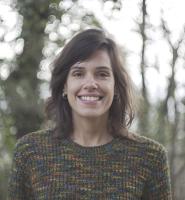
Fuzessy Lisieux
- Investigadora postdoctoral Talento
- Departamento: Biogeografía y Cambio Global
- Dirección física: Calle de José Gutiérrez Abascal 2
- Email: lisieux.fuzessy@mncn.csic.es
- Número ORCID: 0000-0001-9599-9782
- Palabras clave:
Investigación
I am an ecologist with broad interests in community ecology, macroecology, eco-evolutionary dynamics, and global change biology. My interest is unsurprising, given that I come from Brazil, one of the most biodiverse countries on Earth and one where species are disappearing at a higher rate. Thus, I have had first-hand experience on the great diversity and complexity of integrated systems working together, and on the huge impact that humans are causing on the functioning of these systems. My current research focuses on understanding how anthropogenic pressures reshape ecological interactions and affect biodiversity. Throughout my career, I have developed two complementary and interconnected research lines: (1) investigating the effects of land-use change, habitat loss, and landscape heterogeneity on community composition, functional diversity, and key ecological processes; and (2) exploring mutualistic networks, particularly frugivory, with emphasis on phylogenetic congruence and functional traits as drivers of network structure and stability. My scientific trajectory integrates field ecology, macroecology, ecological modelling, and evolutionary perspectives to address how biodiversity is structured and maintained across scales. To this end, I combine large-scale ecological synthesis with advanced modelling approaches, integrating extensive interaction databases (e.g., NeoFrugivory and FRUGivory INTegration-FRUGINT), trait-based information, phylogenetic data, and landscape attributes to uncover the mechanisms linking functional diversity, evolutionary history, and network stability. I employ cophylogenetic analyses, spatiotemporal network modelling, and predictive frameworks to investigate how interactions are lost, maintained, or reorganized ('rewiring'), identify functional tipping points, and assess ecosystem resilience under global change scenarios. In parallel, my research includes field-based and empirical approaches to understand seed dispersal processes, particularly the role of vertebrates such as primates in shaping plant recruitment. By moving beyond species-level approaches and explicitly focusing on interaction dynamics, my work aim to provide a mechanistic and predictive understanding of biodiversity responses to environmental change, contributing to advancing conservation strategies in the Anthropocene.
Otros investigadores del departamento
- Rey Simo Ana
- Álvarez Hugo Alejandro
- André Ferreira Mira
- Aragon Carrera Pedro
- Bastos Araújo Miguel
- Bengochea Paz Diego
- Benítez López Ana
- Bravo-Oviedo Andrés
- Camacho Luis
- Cante Bazán Enrique
- Clemente Orta Gemma María
- De la Peña Aguilera Pablo
- Diaz Esteban Mario
- Flores Olivos Juan Sebástian
- Galiana Ibañez Nuria
- Godefroid Martin
- Goicolea Marín Teresa
- Gómez-Vadillo Mónica
- González Cristóbal Marina
- González Pulido Laura
- González Trujillo Juan David
- González Ximénez de Embún Miguel
- Herrando Pérez Salvador
- Hortal Joaquín
- Jiménez Lalana Diego Esteban
- Jiménez Valverde Alberto
- Lanzas Mónica
- Maestre Villanueva Jorge
- Mario Alamo del Olmo
- Martínez Domínguez Paula
- Mendoza Manuel
- Merino Robert Nicolàs
- Miguel G. Matias
- Miguel Lobo Jorge
- Mingarro López Mario
- Paltrinieri Laura
- R. Pertierra Luis
- Rausell Moreno Armand
- Ronquillo Ferrero Cristina
- Sánchez Albert Adrián
- Sánchez Pinillos Martina
- Ursul Colomé Guim
- Vagenas Georgios
- Valladares Ros Fernando
- Wilson Robert J.